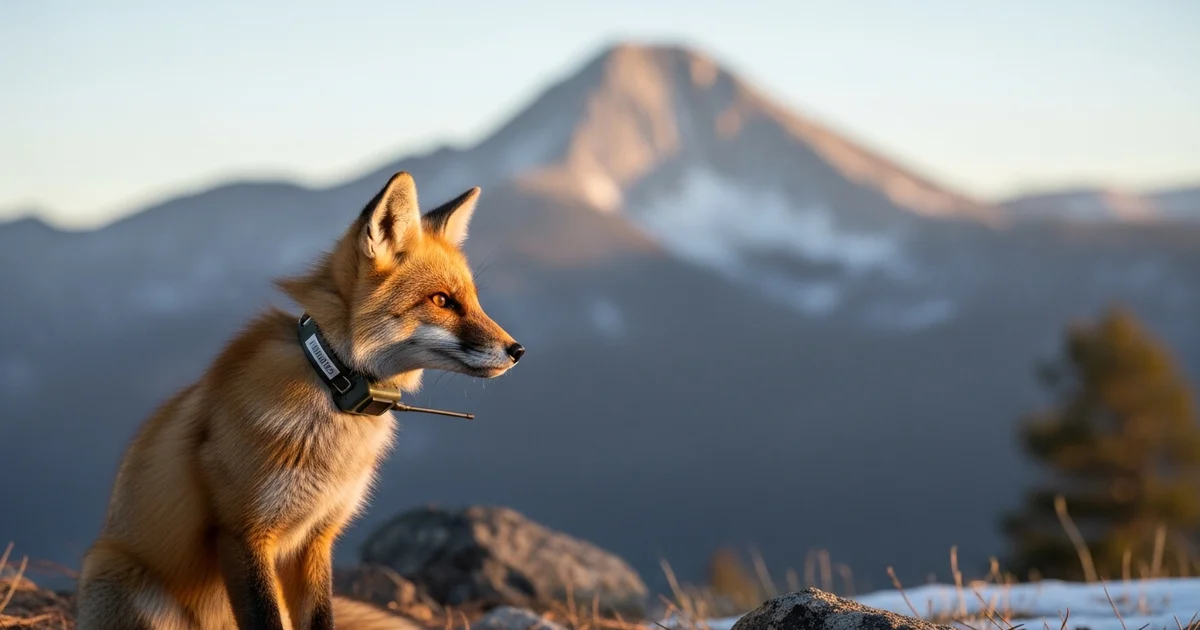
MAMMOTH LAKES, CA — Biologists with the California Department of Fish and Wildlife (CDFW) successfully captured and fitted a Sierra Nevada red fox with a GPS tracking collar in January 2026. This achievement marks the first time the rare species has been tracked with a GPS collar in the southern Sierra Nevada region.
The agency’s Bishop-based team led the capture efforts near Mammoth Lakes. This milestone follows a decade of surveys using remote cameras and studying animal droppings (scat). It also comes after three years of intensive trapping attempts.
Protecting a Rare Species
The fox is currently listed as a threatened species in California and is endangered at the federal level. Conservationists estimate that fewer than 50 of these foxes remain in the Sierra Nevada mountain range.
These foxes were once thought to have vanished from the region entirely until the species was rediscovered in 2010, when a trail camera captured a photo of one at Sonora Pass. Unregulated hunting and trapping during the early 20th century caused the population to decline.
Today, the remaining foxes live in small, isolated groups. Because these groups are separated, the foxes cannot easily find new mates from other areas, making it harder for the population to stay healthy and grow.
Future Research and Recovery
Officials say they will use data collected from the new GPS collar and biological samples—such as fur or blood—to better protect the fox and help the population recover. This tracking information will show researchers how the fox lives and behaves in the wild.
CDFW Environmental Scientist Julia Lawson and her team say the new data will make future research more effective, similar to a 2018 study near Lassen Peak in Northern California. In that project, biologist Jennifer Carlson used GPS collars to find dens and learn what the foxes need to survive.
This conservation project is part of California’s 30x30 Initiative. The goal of that state program is to protect 30% of California’s lands and coastal waters by 2030.
The agency says this breakthrough provides vital new information to help save the species. For more details on the mission, visit the CDFW news archive.


