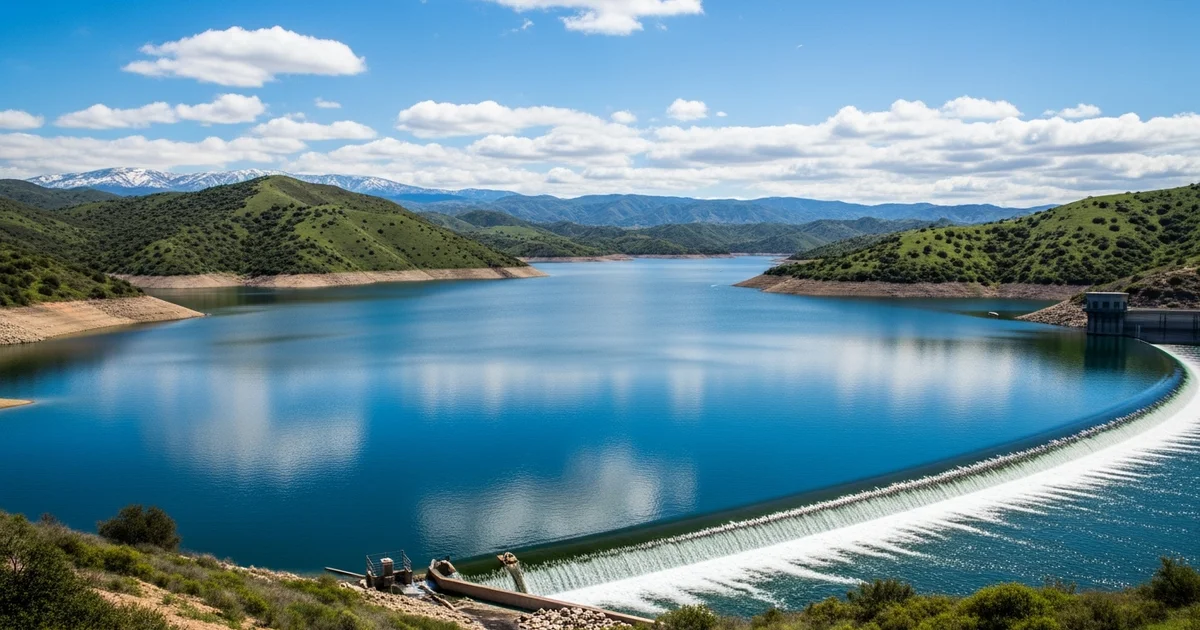
SACRAMENTO — California is completely drought-free for the first time in several years. The U.S. Drought Monitor confirmed the status on Thursday, Jan. 15, marking a significant milestone in the state’s water recovery.
State officials say the recovery is due to recent winter storms following average rain and snow in 2024 and an exceptionally wet 2023. These weather patterns are replenishing major reservoirs and the state’s water systems.
According to the State Water Project, Lake Oroville—the system’s largest reservoir—has seen its water levels climb 82 feet since Dec. 20. This rise allowed the state to capture more than 930,000 acre-feet of water. An acre-foot is about the amount of water needed to cover a football field one foot deep. This captured water is enough to supply nearly 3 million households for a year.
Snowpack and Groundwater Levels
Water experts track rain and snow using a "water year" that begins every October. The 2026 water year has started with levels higher than normal for mid-January. As of Jan. 15, snow levels in California’s mountains are measuring near or above typical seasonal averages.
This progress follows the 2024 water year, during which groundwater storage increased by 2.2 million acre-feet across 98 underground basins. This is enough to meet the yearly water needs of millions of families. State officials say these gains come from storing water in underground layers called aquifers. This process helps ensure the state has enough water for the future.
Investment in Infrastructure
State leaders also pointed to new projects and funding meant to help California better handle future droughts. In August 2025, the Newsom administration set aside another $219 million for the Sites Reservoir project in the Sacramento River Basin.
Once it is finished, the reservoir will have a capacity of 1.5 million acre-feet. State officials estimate this is enough water to provide for approximately 4.5 million homes for an entire year.
Beyond water storage, the state is also working to protect the environment. The Big Notch project recently began operating in the Sacramento River Basin to help fish swim past river barriers. According to the State Water Project, this allows endangered winter-run Chinook salmon to migrate while maintaining water flow for tens of millions of residents.
While the end of the drought provides immediate relief, state agencies will continue to monitor conditions throughout the remainder of the 2026 water year.


