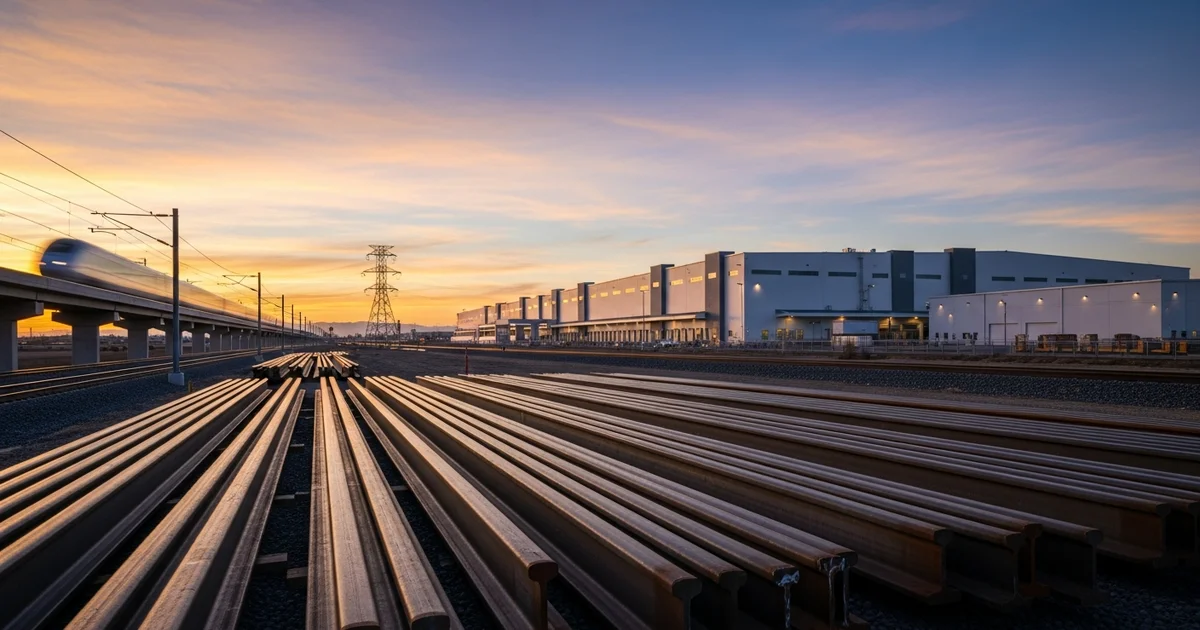
WASCO, CA — Governor Gavin Newsom and state leaders gathered in Kern County on Tuesday to celebrate the completion of the Southern Railhead Facility, a major milestone that signals the start of track installation for California’s high-speed rail project.
The 150-acre supply and distribution center in Wasco will serve as the primary hub for the project. It features storage tracks, warehouses, and maintenance space designed to organize and move the materials needed to power and operate the high-speed trains.
The opening of this facility marks a shift in the project's focus. For years, crews have worked on the foundation of the system, such as building large structures. Now, the project is moving into the systems installation phase, which involves laying the actual tracks and power lines.
According to state officials, crews have already finished the foundations and structures for more than 80 miles of the route, including 58 bridges and overpasses. This progress clears the way for the new supply hub to begin delivering the components necessary to turn those foundations into a functioning railway.
Progress Along the Route
Currently, design and construction work is active on a 171-mile segment of the rail line between Merced and Bakersfield.
Beyond the Central Valley, state officials have finished the construction plans and environmental reviews for 463 miles of the planned 494-mile system. These environmental reviews are detailed studies that look at how the project impacts the land and local communities. Once the entire system is finished, the route will connect San Francisco to Los Angeles and Anaheim.
Economic and Financial Impact
The rail project has become a major contributor to the state's economy, particularly in the Central Valley. According to state data, the initiative has generated approximately $25 billion in local business and spending and has supported nearly 122,000 full-time jobs.
The project’s long-term funding was also recently secured by the California Legislature. The rail initiative will receive $1 billion each year through 2045. The money comes from the state’s Cap-and-Invest program, which charges companies for the pollution they produce. Officials noted that this commitment provides the project with its most stable budget in a decade.
Following Tuesday's opening ceremony, the Wasco facility will begin preparing and staging materials for the upcoming track work through the Central Valley.


