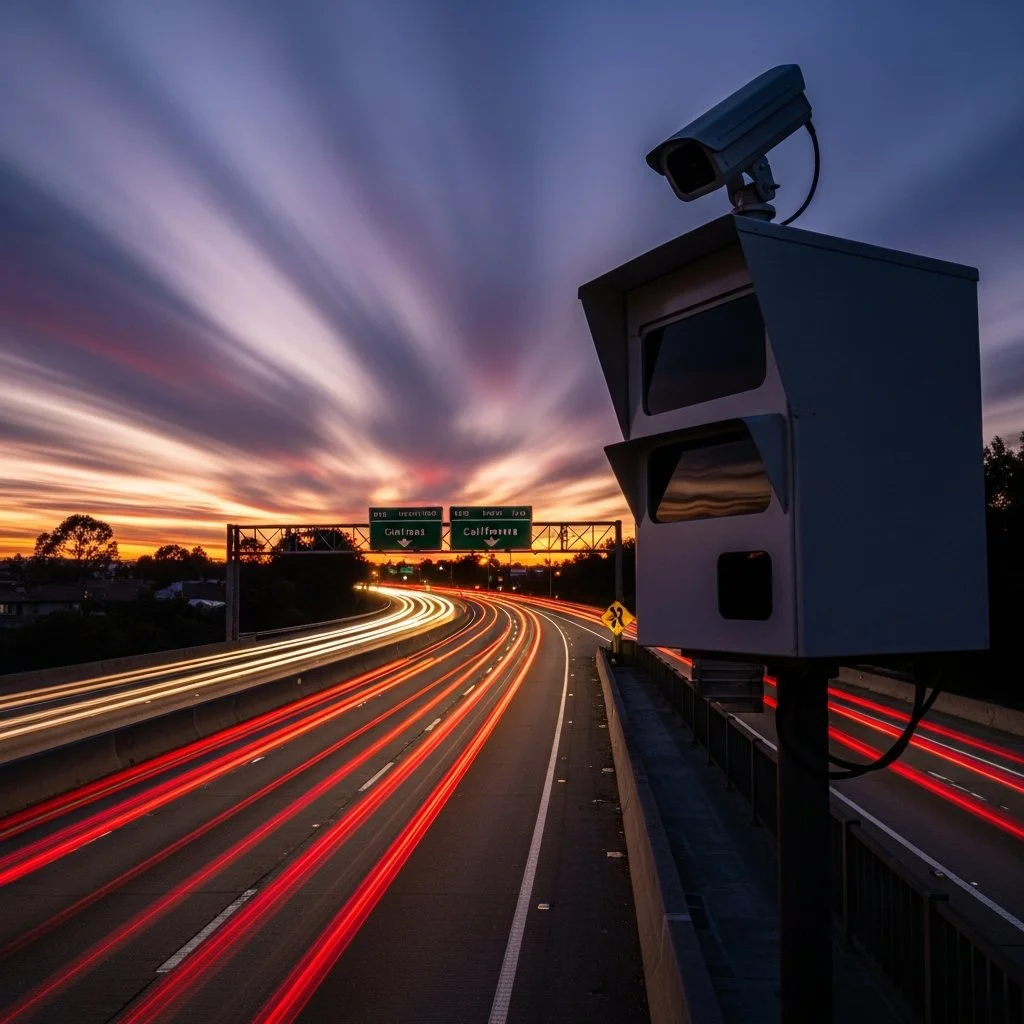
LOS ANGELES, CA — California began enforcing several new traffic and vehicle laws on January 1, 2026. A central part of the update is a five-year test program designed to reduce speeding and roadway deaths using automated cameras.
The program, created by a new state law known as Assembly Bill 645, allows cities and towns to place speed cameras in high-risk areas. These locations include school zones, construction zones, senior centers, parks, and busy shopping or business areas. The cameras take photos of speeding vehicles, and the city then mails tickets to the owners.
Speeding Fines and Penalties
Under the new camera program, the cost of a ticket depends on how fast the driver was going. These tickets are treated like parking violations and do not add points to a driver’s record. The fine structure is as follows:
- $50 for driving 11 to 15 mph over the limit.
- $100 for driving 16 to 25 mph over the limit.
- $200 for driving 26 mph over the limit, up to a total speed of 99 mph.
- $500 for any vehicle traveling 100 mph or faster.
While camera tickets only result in a fine, drivers pulled over by a police officer face harsher penalties. If the California Highway Patrol stops a driver traveling 100 mph or faster, the Department of Motor Vehicles can take away their license.
Rollout in California Cities
The start dates for the camera program depend on the city. San Francisco and Glendale have already launched their cameras. Early data from 15 camera locations in San Francisco shows a 72% drop in speeding since August 2025, with more than 16,000 tickets issued.
Other participating cities include Oakland and San Jose. Long Beach and Malibu plan for enforcement to start in the spring of 2026, followed by Los Angeles in mid-2026.
Roadway and Speed Limit Changes
The California Department of Transportation (Caltrans) can now use automated speed cameras in highway work zones. Caltrans also has new authority to reduce existing highway speed limits by 5 mph. For the first 30 days after a change, the department must issue warnings instead of tickets.
Cities and towns can now lower speed limits in school zones to 20 mph. By 2031, the state will require this lower limit for all marked school zones. The state also expanded its "Move Over" law. Drivers must now slow down or change lanes for any stopped vehicle showing hazard lights or warning signals, including broken-down passenger cars.
E-bikes and New Technology
New rules also affect electric bikes and scooters. E-bikes must have red rear lights or reflectors visible at all times. Off-road electric motorcycles, known as "eMotos," are now treated as off-road vehicles. This means they require helmets and DMV license plates.
Police can now impound Class 3 e-bikes for at least 48 hours if the rider is under 16 or the bike isn't properly registered. These are the fastest e-bikes and can reach speeds of 28 mph. Minors caught without a helmet on an e-bike can have their ticket dismissed if they complete an online safety course through the California Highway Patrol.
Changes are also coming for self-driving vehicles. By July 1, 2026, all fully driverless vehicles must have two-way communication systems to speak with first responders. Additionally, new laws address fire risks from lithium-ion batteries. Warning labels are now required for all lithium-ion batteries sold in the state. Rented e-bikes and scooters must meet these battery safety standards by 2028.


