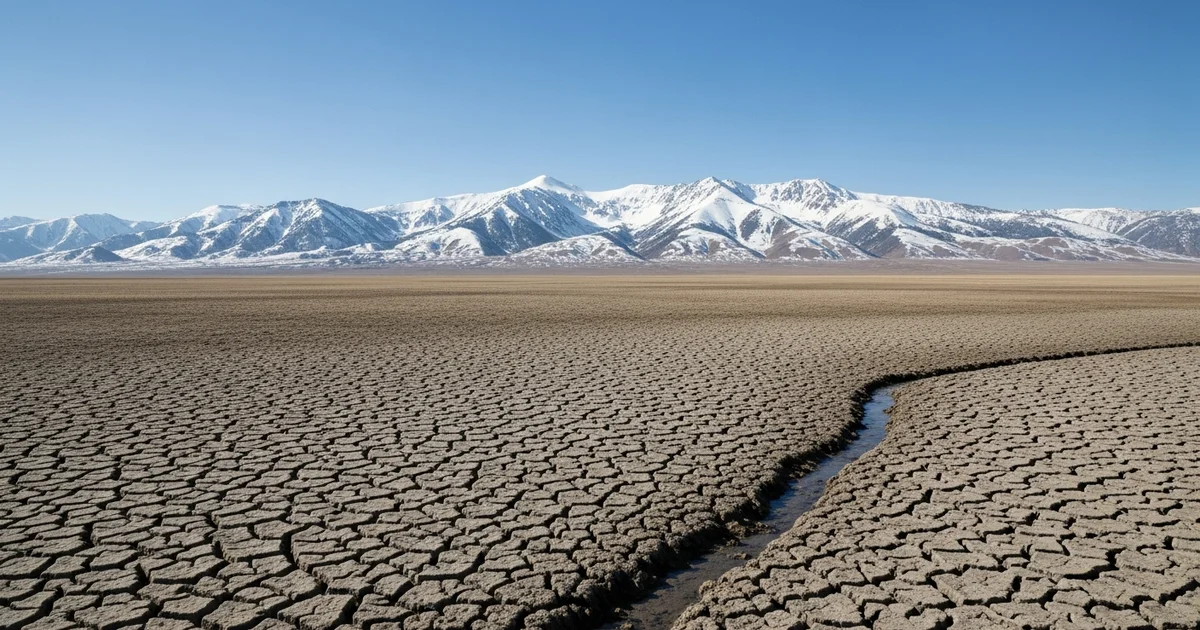
SACRAMENTO — State water officials reported Friday that California’s snowpack has declined significantly over the last three weeks, falling well below normal levels after a warm and dry January.
According to the California Department of Water Resources (DWR), the statewide snowpack currently stands at 59% of the average for this date. This marks a sharp decrease from the 89% reported just three weeks ago.
Officials shared the results during the season’s second manual snow survey, held Jan. 30 at Phillips Station, about 90 miles east of Sacramento. Technicians there measured a snow depth of 23 inches. If melted, that snow would equal 8 inches of water—only 46% of the average for late January at that site.
High Reservoir Storage
While the snowpack is struggling, the state’s overall water storage remains in a strong position. Heavy rain in late 2025 and early 2026 has kept statewide reservoir levels at 126% of their average for this time of year. This high storage is expected to help protect the state’s water supply even if the snowpack does not fully recover.
However, experts are concerned about the lack of recent rain and snow. Total snowpack volume across the state has shrunk by about 5% since the start of the month as warm weather melted existing snow.
Recovery Outlook
Weather experts forecast that dry conditions will continue for the next two weeks. According to the DWR, this leaves about eight weeks for the snowpack to recover before it usually peaks on April 1.
Andy Reising, who manages snow surveys for the DWR, noted that every week without major snowfall dries out mountain soils, making it harder for the state to catch up on water supplies. Dry soils soak up snowmelt before it can flow into reservoirs. This results in less water runoff in the spring and an increased risk of wildfires later in the year.
The California Cooperative Snow Surveys Program monitors state water conditions by collecting data from more than 260 sites across the state. Officials will continue to track whether late-season storms can bridge the gap before the spring melt begins.


