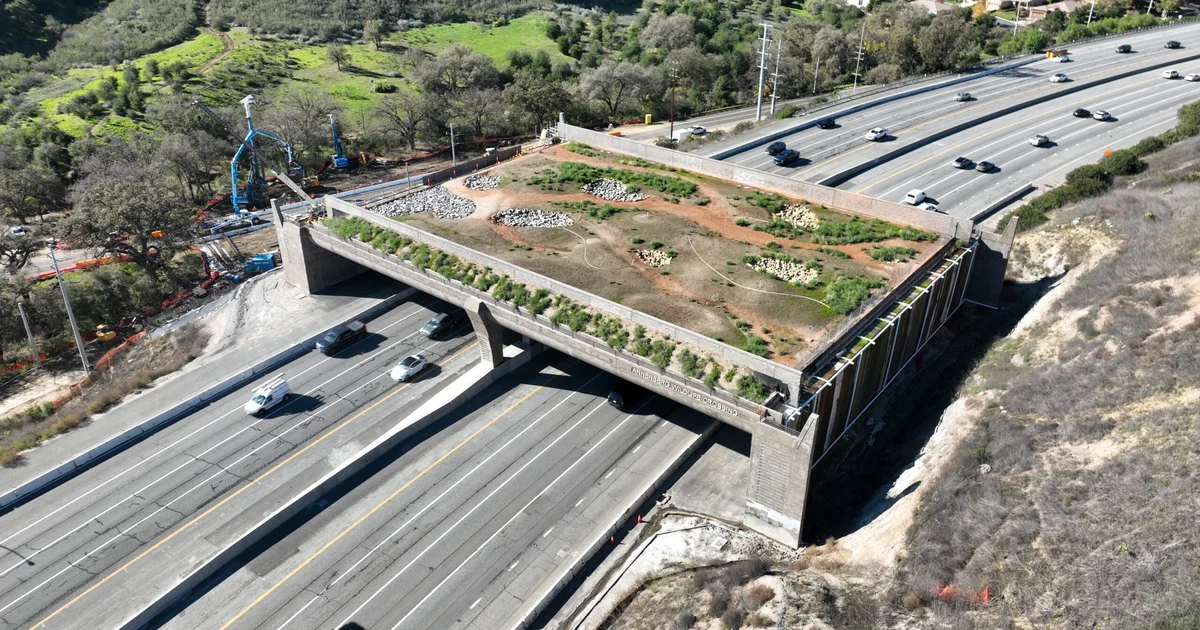
SACRAMENTO — The California Transportation Commission set aside $18.8 million on Monday, providing the last of the money needed to finish the Wallis Annenberg Wildlife Crossing. This funding ensures the project remains on track to open in the fall of 2026.
Crews are building the bridge across Highway 101 in Southern California. The money comes from a state grant program that helps protect and restore natural areas. Once finished, the bridge will be the largest wildlife crossing in the world.
Reconnecting Natural Areas
The bridge will connect the natural lands of the Sierra Madre Range to the Santa Monica Mountains. By giving wildlife a safe way to cross over the highway, the project aims to reduce car accidents involving animals and help local wildlife survive in the long term.
When construction is complete, the site will include 12 acres of restored natural land. Workers will plant 50,000 native plants, such as coastal sage, to help the crossing blend into the surrounding hills.
Investing in Roads and Transit
The commission approved the bridge funds as part of a larger statewide investment. In total, the state is spending nearly $1 billion on various road and public transit projects. These improvements aim to make communities safer and help the state prepare for extreme weather.
This work supports California’s “30x30” plan, which seeks to protect 30% of the state’s natural areas by 2030. Within the last year, the state has protected more than 1 million acres of land and water as part of this effort.
Honoring a Conservation Legacy
The bridge is named for the late Wallis Annenberg, a major donor to charitable causes who was inducted into the California Hall of Fame in 2025. This recognition reflects her decades of work to protect nature. The bridge honors Annenberg’s legacy by finally reconnecting a natural landscape that has been divided for many years.


