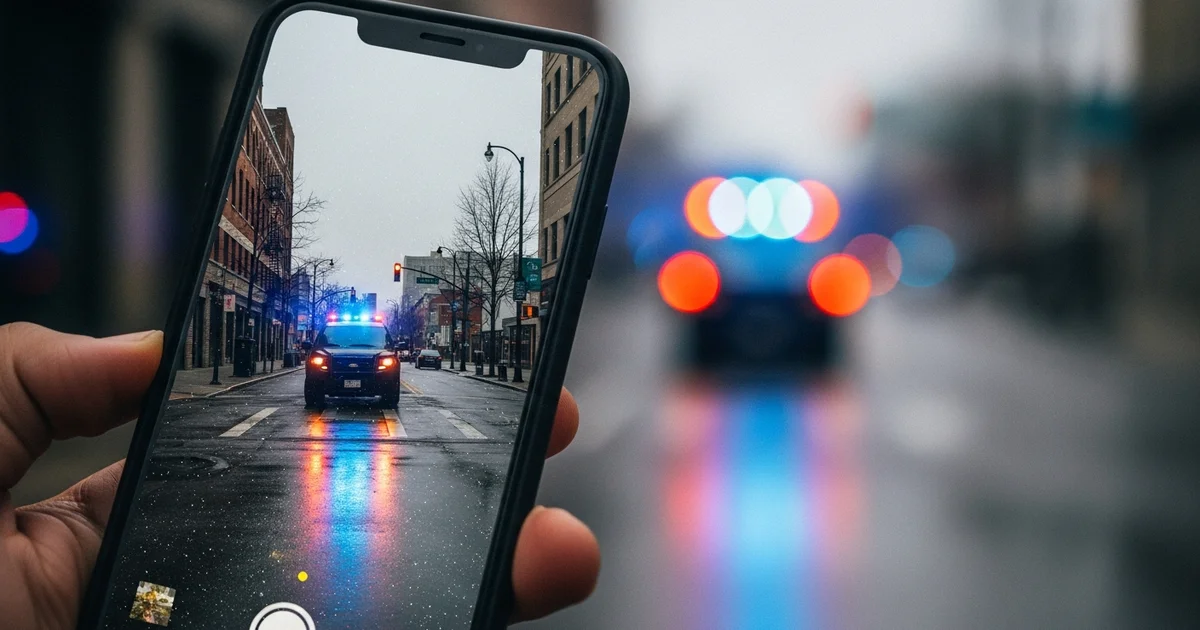
MINNEAPOLIS — Federal immigration agents fatally shot a 37-year-old man on Saturday, Jan. 24, 2026. Bystanders recorded the incident from several angles and shared the footage widely on social media.
This incident marks the second fatal shooting by federal officers in Minneapolis this month. In early January, a U.S. Immigration and Customs Enforcement (ICE) agent shot and killed a woman. Witnesses filmed that shooting, and those videos also spread quickly online.
Bystander videos often challenge early reports from officials. In these recent cases, the footage contradicted initial accounts provided by federal agents, making it harder for authorities to deny what was recorded.
The reach of these recordings has been massive. According to a YouGov poll, 70% of Americans have seen social media footage of the first fatal shooting involving a federal officer in early January.
On Jan. 14, 2026, Minnesota Governor Tim Walz asked residents to film federal immigration agents to document their actions. The governor said these videos would provide valuable evidence for future court cases.
A History of Bystander Recordings
These recent incidents follow a long history of videos changing how the public and the courts see police actions:
- In 1991, a bystander used a handheld camera to film four LAPD officers beating Rodney King. When the officers were later found not guilty, it led to major riots in 1992.
- In 2009, witnesses in Oakland used digital cameras and phones to record a transit officer fatally shooting 22-year-old Oscar Grant on a train platform.
- In 2020, a bystander filmed the murder of George Floyd by Minneapolis officer Derek Chauvin. The footage sparked the global Black Lives Matter movement.
New Challenges in Deciding What Is Real
In the past, people often saw video as solid proof. However, Professor Dhavan Shah of the University of Wisconsin-Madison warned that artificial intelligence (AI) can now create "deepfakes." These are videos that look real but are actually fake, making it hard to know what to trust.
Media scholars, including Penn State University Professor Mary Beth Oliver, also noted that people no longer get their news from the same few sources. Instead of everyone watching the same TV news, many people now get different information from their own social media feeds.


