WASHINGTON — NASA is scheduled to launch Artemis II as early as February 6, 2026. This mission will be the first flight with a crew in NASA’s new moon program. It is designed to prove that the equipment can safely support humans during deep-space travel.
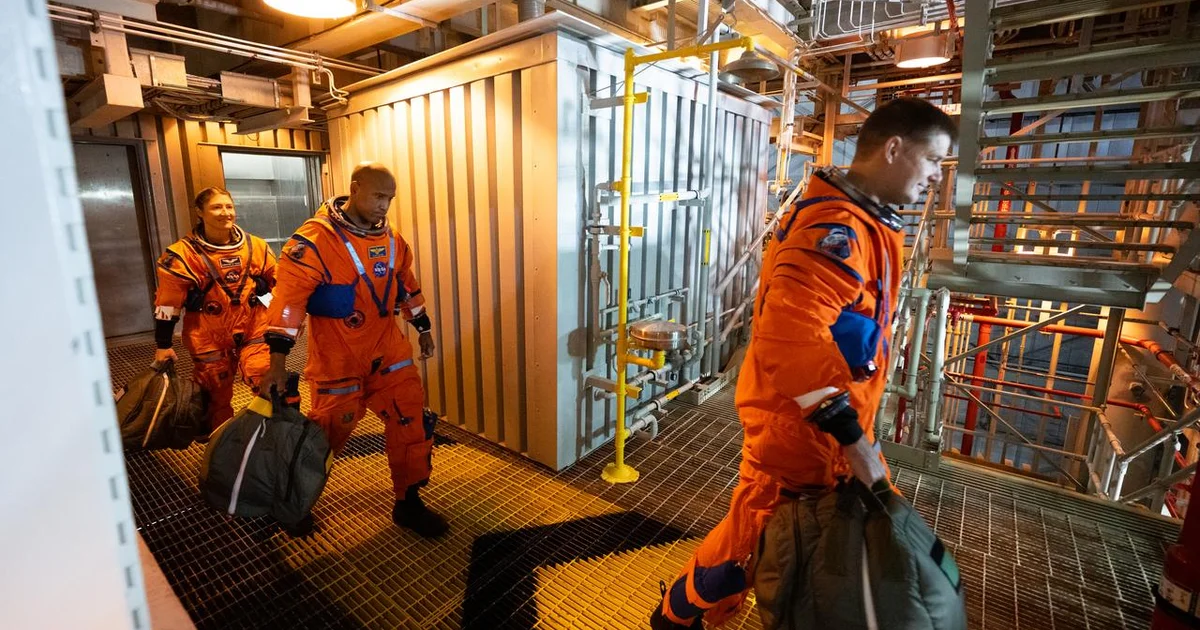
The four-person flight crew includes NASA astronauts Reid Wiseman, Victor Glover, and Christina Koch, along with Canadian Space Agency astronaut Jeremy Hansen. On January 17, 2026, ground crews attached the Orion spacecraft to the Space Launch System (SLS) rocket and moved it to the launchpad to prepare for the flight.
Heat Shield Safety Debate
The mission is moving forward despite a debate over the safety of the spacecraft’s heat shield. During the uncrewed Artemis I test flight in 2022, the heat shield was unexpectedly damaged. Chunks of its protective coating broke apart as the craft returned to Earth. According to NASA, internal gas buildup caused the material to crack and crumble.
Several technical experts and former NASA employees, including Dr. Charlie Camarda and Dr. Dan Rasky, have spoken out against the mission. They have raised concerns that the current heat shield design could break apart and put the astronauts in danger when they return to Earth. In response, NASA Administrator Jared Isaacman held a safety review meeting on January 8, 2026, to address these concerns.
To lower the risk, NASA leaders changed the return path to keep the capsule high in the thin upper atmosphere for a longer time. This "loft" trajectory avoids the extreme heat and pressure that damaged the shield during previous tests. While future missions will feature a heat shield with tiny holes designed to let gas escape, Artemis II will use the current version without them.
Flight Path and Testing
The mission will follow a figure-eight "free-return" flight path, traveling more than 230,000 miles from Earth and passing around the far side of the moon. This path uses the gravity of the Earth and moon to pull the spacecraft back home without using its engines. The crew is expected to set a new human spaceflight distance record, breaking the record set by Apollo 13.
During the flight, the crew will practice steering the capsule close to the rocket’s upper stage. This is the part of the rocket that pushed them toward the moon. The test will show how well the crew can maneuver in space. This skill is necessary for docking with other spacecraft on future missions.
The flight will also test NASA’s Deep Space Network, allowing the crew to communicate with Earth from much further away than typical satellites can reach.
Mission Background and Recovery
The Orion spacecraft took 20 years to develop and cost about $20.4 billion. At launch, the SLS rocket will generate more than 8.8 million pounds of thrust to lift the crew away from Earth.
Upon its return, the Orion capsule will hit the atmosphere at temperatures reaching 3,000 degrees Fahrenheit. A series of eight parachutes will slow the craft for a splashdown in the Pacific Ocean, where the U.S. Navy will help recover the crew and the spacecraft.


