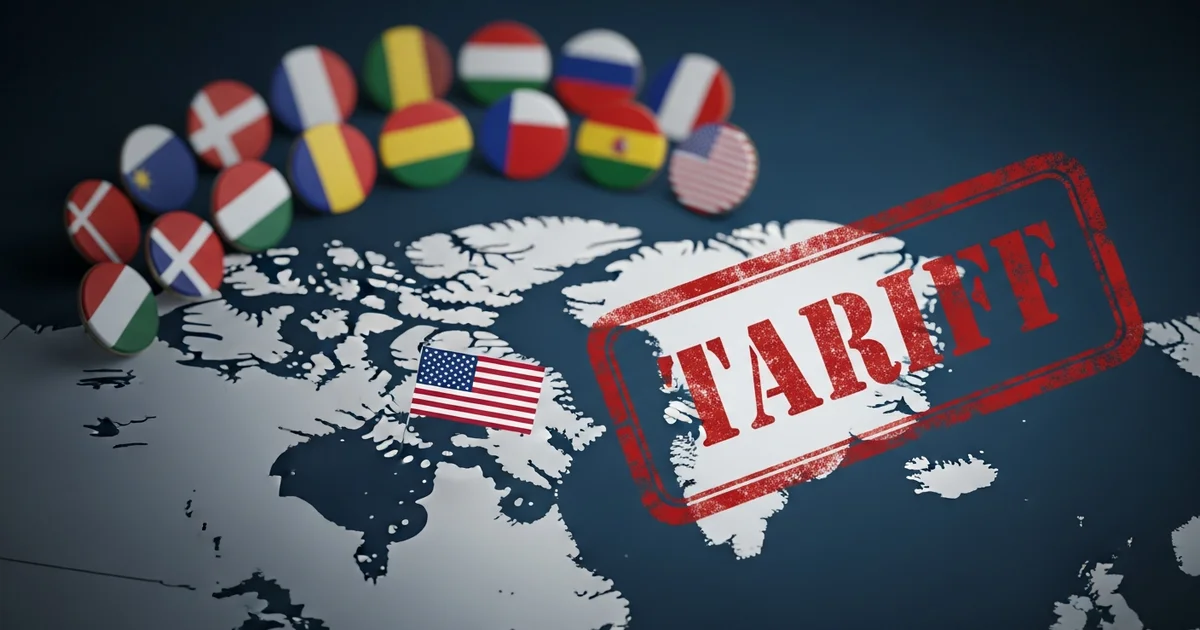
WASHINGTON — On January 3, President Donald Trump announced a 10% tariff—a tax on imported goods—for products coming from Denmark and seven other European nations. The move aims to pressure Denmark into selling Greenland to the United States.
The administration said these taxes are scheduled to rise to 25% on June 1, 2026, unless the U.S. and Denmark reach a deal for the land. In addition to Denmark, the taxes target Finland, France, Germany, the Netherlands, Norway, Sweden, and the United Kingdom.
Rejection and European Response
This decision follows a Jan. 2 meeting between Danish Foreign Minister Lars Løkke Rasmussen and U.S. Secretary of State Marco Rubio. During the meeting, Rasmussen told Rubio that Greenland is not for sale and that a deal is not in Denmark’s best interest.
After the tariffs were announced, leaders from the eight affected countries issued a joint statement on January 4. They warned that the economic pressure risks a "dangerous downward spiral" in relations between the U.S. and Europe.
European Union leaders, including Commission President Ursula von der Leyen and Council President António Costa, backed Denmark’s right to keep its land and borders. In the European Parliament, lawmakers suggested the EU might pause a trade deal with the U.S. and create new rules to help member nations block the taxes.
Military Training in Greenland
The trade dispute comes during a joint military training exercise in Greenland called "Operation Arctic Endurance." European troops began arriving for the training in early January to help strengthen security in the Arctic region.
President Trump used these drills as a reason for the new taxes, saying the military exercises could be dangerous. However, some nations have very little involvement in the training. For example, the United Kingdom had sent only one military officer to the exercise as of early January.
Domestic and Legal Challenges
Within the United States, the plan has met resistance from both Democratic and Republican lawmakers. Senators Jeanne Shaheen, a Democrat from New Hampshire, and Thom Tillis, a Republican from North Carolina, warned that the taxes could raise prices for American families and businesses while harming the NATO military alliance. Senator Lisa Murkowski, a Republican from Alaska, called the tariffs unnecessary and a mistake.
The U.S. Supreme Court is currently reviewing a separate case. The ruling could decide if a law called the International Emergency Economic Powers Act gives the president the power to set taxes without approval from Congress. This decision is expected to show how much power the president has to change trade rules on his own.


