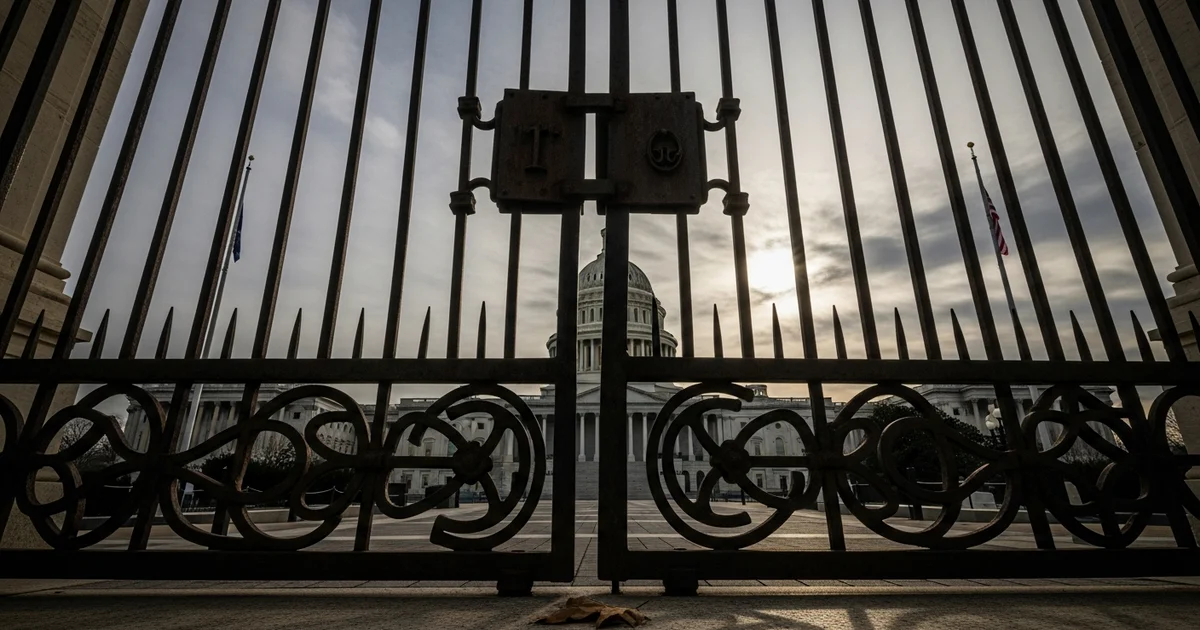
WASHINGTON — The United States federal government entered a partial shutdown today, Saturday, Jan. 31, 2026. The shutdown began because Congress could not agree on a budget or new policy changes before the funding deadline.
While the shutdown has limited many services, the House of Representatives is scheduled to vote on funding bills on Monday, Feb. 2, 2026, to try to end the standoff. Several major federal departments have run out of money, including the Department of Defense, the Department of Transportation, and the Department of Homeland Security (DHS).
Why the shutdown happened
An incident in Minneapolis in January sparked the funding deadlock, when federal law enforcement officers fatally shot two people. The incident led to demands for law enforcement reform.
The Associated Press reports that Democrats in Congress want any new funding for the Department of Homeland Security to include new rules for how officers behave and identify themselves. Disagreements over these specific requirements have kept the larger spending bills from passing.
Impact on workers and services
The shutdown is creating financial uncertainty for government workers. Essential employees, including air traffic controllers, are required to keep working without pay until a budget is passed. This has raised concerns about possible travel delays for the public.
The Federal Emergency Management Agency (FEMA) is also cutting back on some services. Experts say FEMA has about $7 billion to $8 billion for disaster recovery, but the agency cannot renew or start new flood insurance policies. This means homeowners currently cannot update or buy coverage through the National Flood Insurance Program.
Programs not affected
Some major services will not be affected by the shutdown. Food assistance programs, such as the Supplemental Nutrition Assistance Program (SNAP, often called food stamps) and the Women, Infants, and Children (WIC) program, are already funded through Sept. 30, 2026. As a result, about 42 million people will continue to receive their benefits without interruption.
Lawmakers are expected to return to the Capitol on Monday to continue negotiations as they work to restore all government services.


