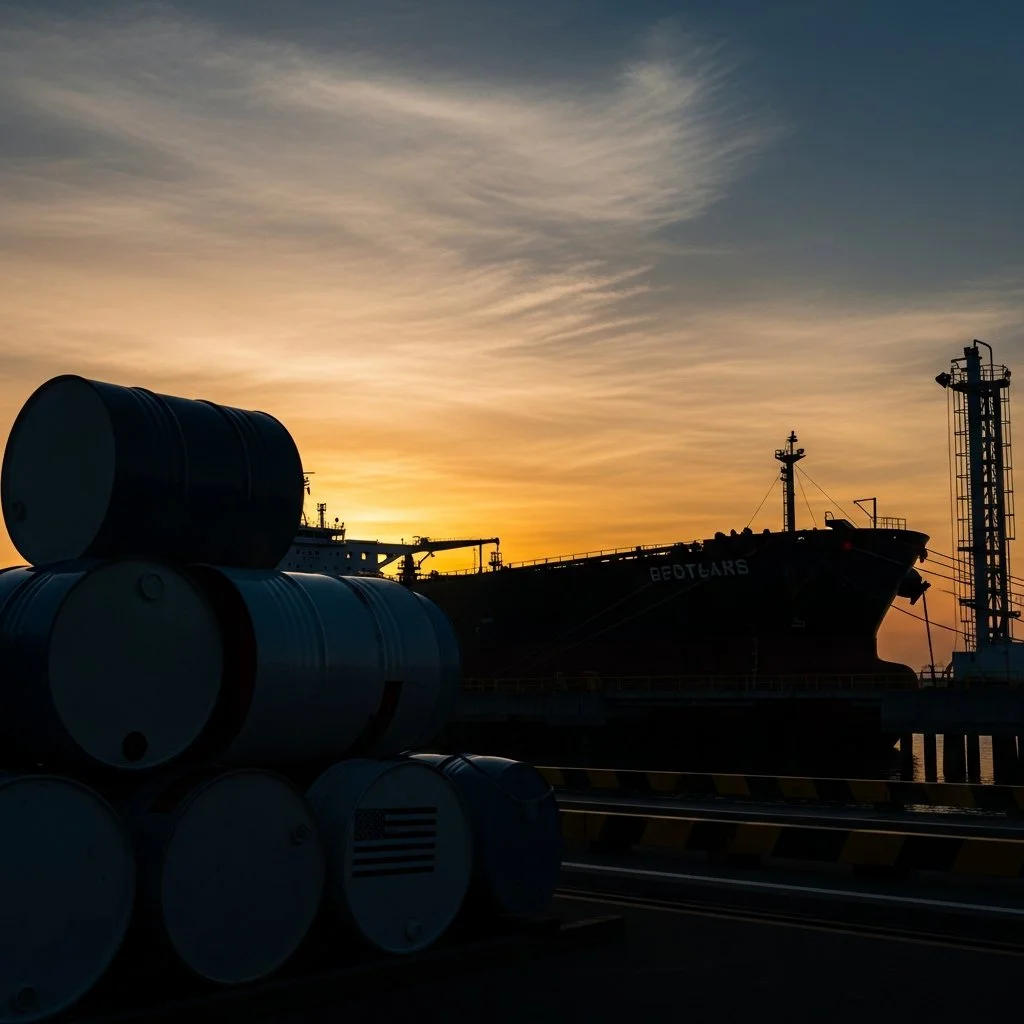
WASHINGTON, D.C. — On January 7, 2026, Donald Trump announced that the United States would take between 30 million and 50 million barrels of Venezuelan oil. The supply was sitting in storage tanks and tankers at Venezuelan ports where shipments had stopped moving.
The announcement triggered an immediate drop in the global market. According to reporting by The Guardian, average global oil prices fell on January 7 by more than 1% to just above $60 per barrel. U.S. oil prices decreased by 1.4% to $56.44 per barrel.
Trump said he has the power to sell up to $3 billion of that oil on the global market. He assigned U.S. Energy Secretary Chris Wright to oversee the transfer of the oil directly from storage tanks and ships to American docks.
Shift in Leadership
These developments followed a major change in Venezuelan leadership. Former president Nicolás Maduro was captured in Caracas on the morning of Saturday, January 3, 2026, after an attack on the city. Following the capture, Trump stated his goal is for the U.S. government and American companies to work with acting president Delcy Rodríguez to gain full access to the country's oil industry.
To discuss the future of the oil industry, Trump met with executives from Chevron, ExxonMobil, and ConocoPhillips at the White House on Friday, January 9, 2026. The discussions focused on multi-billion-dollar plans to rebuild Venezuela's oil facilities and pipelines. Currently, Chevron is the only American oil company still operating in Venezuela. Other U.S. firms left the country in the mid-2000s after the Venezuelan government took over their property and equipment.
Long-Term Recovery and Global Tension
Rebuilding the country's energy sector will likely take many years. According to an analysis by Rystad Energy, getting oil production back to where it once was could take 15 years and require an estimated $185 billion in spending. Over the last 25 years, Venezuela’s oil production has fallen from 3.5 million barrels per day to about 1 million.
The Chinese government objected to the U.S. plan in a statement released on January 7, 2026. Chinese officials called the U.S. oil demands a violation of international law and argued that Venezuela should have full control over its own resources. According to The Guardian, China currently receives about 80% of Venezuela's oil exports. If the U.S. takes control of those resources, China could be forced to pay higher prices for oil from other countries.


