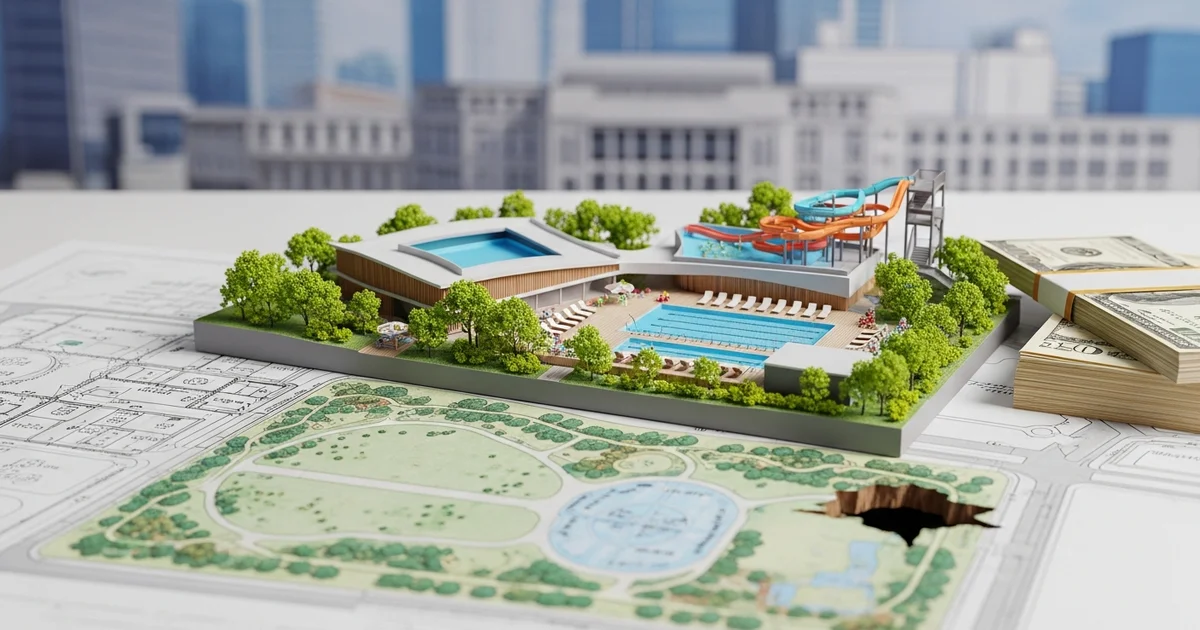
VISALIA, CA — The Visalia City Council plans to review a new Parks and Recreation Master Plan in early 2027. While the plan maps out the future of the city’s parks and open spaces, officials are working to fix major funding gaps for both current and future projects.
The city’s park construction budget is facing immediate pressure. According to city data, the fund is expected to be $3.15 million short by the end of the budget year on June 30.
Projects Face Rising Costs
Rising construction costs and inflation have already impacted several ongoing developments. Four projects, including a new dog park and a playground designed for children of all abilities, are facing a total funding shortage of $10.1 million.
The Pearl Woods neighborhood park is among the projects most affected by these rising costs. The project now costs an estimated $7.6 million, leaving it $4.5 million short. To cover this gap, city staff plan to ask the council for permission to move money from other projects.
Long-Term Shortfalls Predicted
The city’s park fund could face a $44.5 million shortage by 2030. This is likely to happen if the city does not change how it pays for these projects.
Officials noted that while the $44.5 million figure is large, it only exists on paper for now. The total includes long-term projects that haven't started yet and don't have money set aside.
The city’s long-term vision includes a new recreation center, a proposed aquatics center, and the expansion of the 148-acre East Side Regional Park. Mayor Brett Taylor said the estimated cost for the new aquatics center ranges between $15 million and $30 million.
Exploring New Ways to Pay
The city currently funds park improvements primarily through developer impact fees—money paid by builders to help the city pay for new public services.
Finance and Technology Director Renee Nagel said Visalia collects about $2.6 million a year from these fees. Officials say this is no longer enough to cover today’s higher construction costs.
In response to the projected shortfalls, city officials are looking for new ways to raise money, including increasing hotel taxes, implementing a cannabis sales tax, or adding a tax to household utility bills, such as water or electricity.
The city is also considering a local sales tax increase, which officials estimate could bring in between $9 million and $27 million each year depending on the new tax rate.


