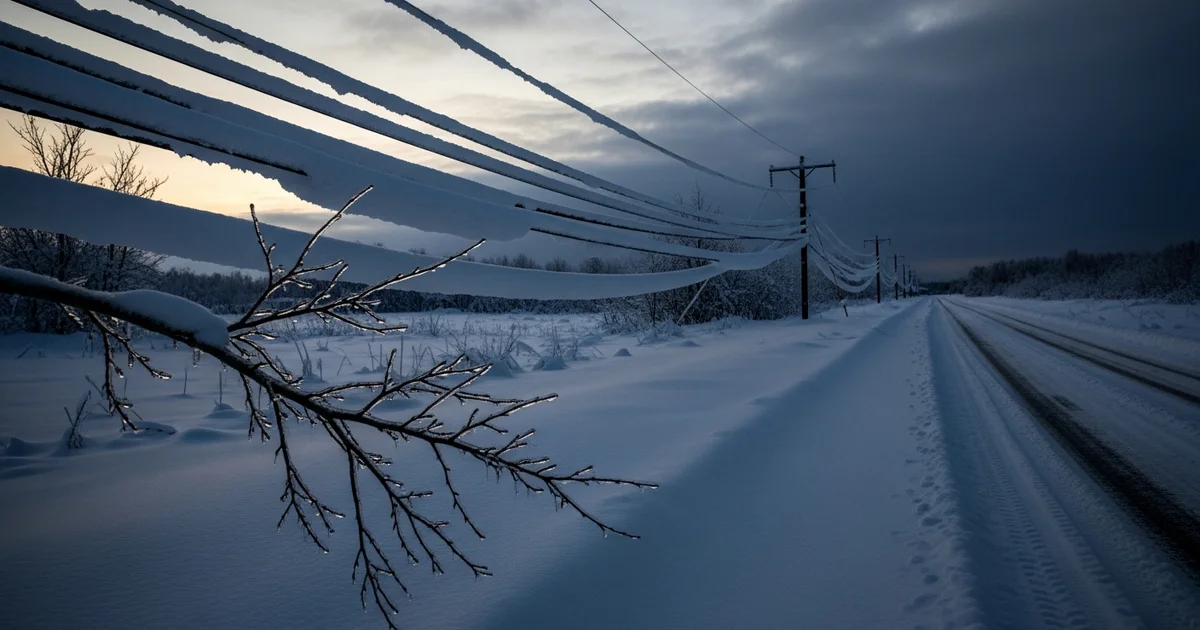
WASHINGTON — A historic winter storm moving across the United States has left more than 700,000 homes and businesses without power. The storm has also disrupted air travel nationwide.
To help manage the impact of the cold and snow, the federal government has declared emergencies in 12 states.
Power Outages and Grid Safety
According to PowerOutage.us, more than 700,000 customers were without electricity as of Sunday, January 25. Tennessee, Mississippi, Louisiana, and Texas have the most significant power outages.
To keep the lights on, the U.S. Department of Energy ordered power grid operators in Texas and the Mid-Atlantic region to produce as much power as possible. These operators were allowed to use backup generators and temporarily ignore some pollution rules so power plants could run at full strength.
Officials said these steps aim to prevent "rotating blackouts." These are short, planned power outages in different neighborhoods used to save energy and prevent the entire grid from failing during the freezing weather.
Travel and Safety Impacts
Airlines canceled more than 15,400 flights between Saturday and Monday. This includes 4,000 flights on Saturday, 9,600 on Sunday, and 1,800 already canceled for Monday. Large carriers like Delta, JetBlue, and United were among the hardest hit. Delta reported widespread cancellations in Atlanta, Boston, and New York City.
Beyond travel disruptions, the extreme weather has also turned tragic. On Saturday afternoon, January 24, three people were found dead on the streets of New York City because of the freezing temperatures. Homeland Security Secretary Kristi Noem urged the public to stock up on food, fuel, and other supplies to prepare for the continued cold.
Government Response and Forecast
On Saturday, President Donald Trump issued federal disaster declarations for 12 states. These include Arkansas, Georgia, Indiana, Kentucky, Louisiana, Maryland, Mississippi, North Carolina, South Carolina, Tennessee, Virginia, and West Virginia.
This move allows federal officials to send money and resources to help those states recover from the storm. Additionally, 17 states and the District of Columbia have formally declared their own weather emergencies.
The National Weather Service forecasted up to 18 inches of snow in New England. It also warned that heavy ice build-up in the Mid-Atlantic and South could cause severe damage. Snowfall totals have already reached one foot in New Mexico and eight inches in parts of Arkansas.


