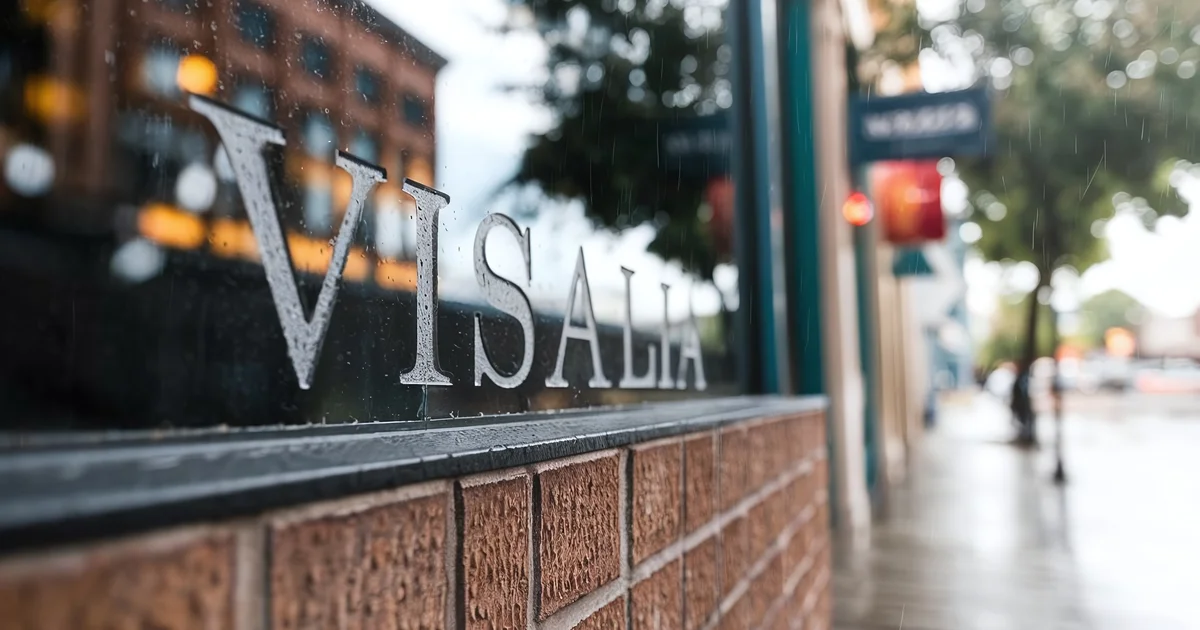
VISALIA, CA — Visalia serves as the county seat of Tulare County and is the primary hub for government and business in the region. As the fifth-most populous city in the San Joaquin Valley, it plays a central role in the agricultural and economic life of Central California.
According to the 2020 United States census, the city’s population was 141,384. Current estimates place the resident count between 140,000 and 145,000. Beyond its role as a regional center, Visalia is notable for being the first-ever Certified Autism Destination in the country. This designation means that workers at many local shops and attractions are trained to help visitors with autism or sensory needs feel more welcome.
Location and Geography
Visalia is located in the heart of the San Joaquin Valley, about 240 miles north of Los Angeles and 200 miles south of San Francisco. The city sits at the base of the Sierra Nevada foothills, making it the main entry point for travelers visiting Sequoia and Kings Canyon National Parks.
Route 99 is the city’s main highway link, with Fresno located about 45 minutes to the northwest. Visalia is also a key stop on the Majestic Mountain Loop, a three-day travel route that visits Sequoia National Park on day one, Kings Canyon on day two, and Yosemite National Park on day three.
Climate and Seasonal Patterns
The local climate features hot, dry summers and mild winters with little rain. Historically, the city reached its record high of 115°F three times: in the summers of 1925, 1931, and 1933. During the summer months, daily temperatures frequently top 100°F.
The area's geography also causes major air quality problems. Pollution from cars and factories often gets trapped against the mountains by a weather pattern called an inversion. This happens when a layer of warm air sits on top of cooler air, acting like a lid and preventing smog from blowing away. Because of these conditions, the American Lung Association has historically ranked Visalia as one of the most polluted cities in the United States.
Cost of Living
While it costs more to live in Visalia than the national average, the area remains more affordable than California’s big coastal cities. Residents often find that the price of groceries, utilities, and housing is much lower than in San Francisco or Los Angeles. This relative affordability often attracts people moving to the area from the Bay Area or Southern California.
Housing and Neighborhoods
Visalia’s housing market features a mix of historic districts and modern suburban developments. The city’s commitment to its natural environment is reflected in the 1971 Valley Oak Ordinance. This law protects the city's oak trees by limiting how valley oaks can be trimmed or cut down on any property.
Notable residential areas include:
- Green Acres: Located in Northwest Visalia, this area is known for its many large oak trees and homes built shortly after World War II.
- Oval Park: This is one of Visalia’s oldest residential areas.
- Downtown: Centered on Main Street, this district features historic buildings and the 'Art on Fire' project, where local artists have painted fire hydrants with unique designs.
Schools and Education Options
The Visalia Unified School District manages the city’s elementary, middle, and high schools. For higher education, the College of the Sequoias (COS) offers community college classes and job training. While several universities have smaller branch locations in the city, Visalia is currently the only Central Valley city of its size without its own local four-year university.
Jobs and Major Industries
The regional economy is supported by farming, healthcare, shipping and distribution (logistics), and retail. Local factories also produce electronics and paper products.
As of June 2023, the area's two largest employers provided more than 8,800 jobs combined:
- Kaweah Delta Medical Center: The main hospital for emergency and specialty medical care in the region.
- Tulare County Government: The headquarters for county offices and services.
Transportation and Commuting
Most residents in Visalia rely on cars to get to work and run daily errands. Public transportation options include the V-Line, a bus service launched in late 2015 that links Visalia to major destinations in Fresno.
Future building plans include the Kings–Tulare Regional Station, which will connect the area to the state’s high-speed rail system. The station is planned for a site about 20 miles west of Visalia.
Healthcare Access
Visalia is the medical center for Tulare County. The Kaweah Delta Medical Center provides most of the specialized care in the region. It offers emergency services to both city residents and those in nearby rural communities who may not have access to specialty care locally.
History of the Region
Tulare County was formed on July 10, 1852, after local pioneers asked the state legislature for county status. The city was named after Visalia, Kentucky—the hometown of Nathaniel Vise, the man who first mapped out the settlement.
Historical highlights include:
- Camp Babbitt: A military post built in 1862 to keep order and stop local support for the Confederacy during the American Civil War.
- Battle of Stone Corral: A violent 1893 shootout outside Visalia where law enforcement caught train bandits John Sontag and Chris Evans.
- Religious Landmarks: The city is home to St. Charles Borromeo, which is noted as the largest Catholic parish church in North America.
Recreation and Lifestyle
Visalia offers various entertainment and outdoor activities:
- Sports: The Visalia Rawhide, a Single-A (minor league) baseball team for the Arizona Diamondbacks, has played at Valley Strong Ballpark since 1946.
- Family Attractions: The ImagineU Children’s Museum features interactive science and art exhibits. Adventure Park offers laser tag, miniature golf, and batting cages.
- Parks and Nature: Mooney Grove Park is a destination for disc golf and is the site of the Tulare County Museum, which displays artifacts from Native American history and the Gold Rush. Nature enthusiasts use the St. John’s River walking trail and the Kaweah Oaks Preserve.
- Lakes: Lake Kaweah, located about 26 miles outside of town, offers trout fishing for those with a valid license. Local reports indicate a parking fee of approximately $10.
Local Events and Community Life
The downtown dining scene centered on Main Street includes local establishments like The Planing Mill (pizza), Sushi Kuu (Japanese), and Pita Kabob (Mediterranean). For dessert, Orange Works on Main Street is known for orange-flavored soft serve. The Vintage Press has provided fine dining since 1966.
Unique local venues include:
- The Darling Hotel: A boutique hotel in a restored 1935 Art Deco building that was once a courthouse. Its rooftop restaurant, Elderwood, offers views of the Sierra Nevada mountains.
- 1852: A venue that combines a brewery with an indoor soccer facility where fans can watch matches.
- Microbrewery District: This downtown area includes Barrel House Brewery and Brewbakers. While the Sequoia Brewing Company has closed its doors, the district remains a destination for craft beer lovers.
Every year, the city hosts the Candy Cane Lane Parade during the holiday season, which concludes with an appearance by Santa and Mrs. Claus.
Pros and Cons of Living in Visalia
Pros:
- Primary gateway to Sequoia and Kings Canyon National Parks.
- More affordable housing and daily needs than coastal California cities.
- Regional hub for specialized medical care and government services.
- Certified Autism Destination status for inclusive travel and recreation.
Cons:
- Significant air quality issues due to weather patterns that trap smog against the mountains.
- Extreme summer heat frequently topping 100°F.
- Dependence on cars for most daily errands and commuting.
- Lack of a four-year university within the city limits.
Who Visalia Is Best Suited For
Visalia is ideal for people who want easy access to the Sierra Nevada mountains while enjoying the services of a mid-sized city. It is a practical fit for those working in the healthcare, government, or agricultural sectors. New residents should be prepared for the environmental conditions of the San Joaquin Valley, including summer heat and air quality patterns.


