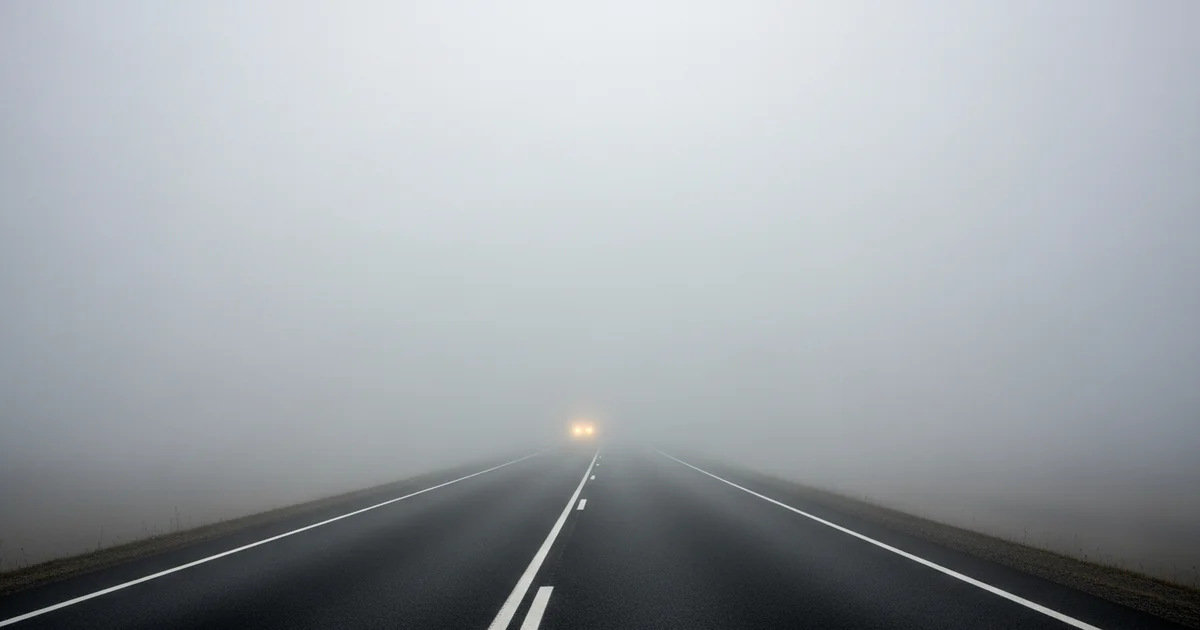
VISALIA, CA — Dense seasonal fog continues to create hazardous driving conditions across the region, prompting safety experts to remind motorists of essential visibility techniques and state lighting laws.
Each year, foggy weather contributes to approximately 38,700 vehicle accidents in the United States. According to national safety statistics, these crashes result in more than 600 deaths and 16,300 injuries. In California’s Central Valley, "tule fog" presents a particular danger from autumn through March, often causing visibility to drop suddenly to just a few feet even when nearby areas are clear.
Driving Tips for Low Visibility
Safety experts advise drivers to slow down and leave more space between cars. This extra room provides more time to react if traffic ahead suddenly stops.
To maintain focus, drivers should remove distractions inside the car. This includes silencing music, putting away phones, and waiting to eat or drink until reaching a destination. Motorists should also use the vehicle's heater to clear condensation from windows to see the road better.
Understanding Lighting Regulations
High-beam headlights should never be used in thick fog. The light from high beams reflects off the moisture in the air and bounces back toward the driver, making it even harder to see. Instead, drivers should use standard headlights and fog lights.
Fog lights are typically located low on the front of a vehicle to illuminate the road surface. On the dashboard, they are identified by a headlight icon with three lines and a wavy slash.
Drivers must follow specific state regulations regarding vehicle lights:
- California: State law allows a maximum of two fog lamps for highway travel. These must be used along with standard headlights, and no more than four lights can be turned on at the same time. Additionally, off-road vehicles must have any extra lights turned off and covered when driving on public highways.
- Oregon: Motorists are required to turn off fog lights when they are within 500 feet of an oncoming car or 350 feet of a vehicle they are following. The state issues a Dense Fog Advisory when visibility drops below one-quarter of a mile. In colder conditions, Oregon may also experience freezing fog, which can coat roads in a layer of ice similar to black ice.
Emergency Procedures
If visibility becomes too poor to drive safely, experts recommend pulling completely off the road. Once the vehicle is off the pavement, drivers should set the emergency brake and take their foot off the brake pedal.
In this situation, it is important to turn off all driving lights and activate emergency flashers. This ensures that other drivers do not mistake a stopped vehicle for one that is still moving.


